
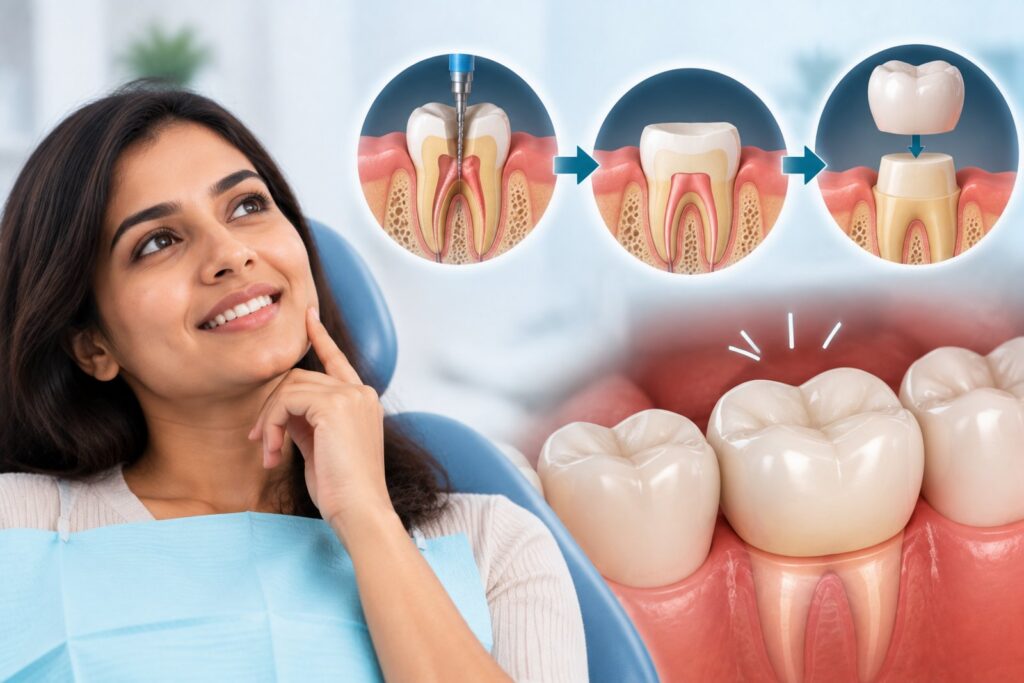
Many people feel relief after a root canal. However, you may wonder why your dentist says you still need a crown. The answer is simple. A root canal crown is key for tooth protection and long-term dental restoration. In this blog, we will explain why crown after root canal is so important. We will also cover the root canal crown necessity and how a dental crown after root canal helps prevent tooth fracture. If you are searching for dental crown specialists in your area, this guide will help you understand the process.
What Is a Root Canal?
First, let’s look at what a root canal is. A root canal is a dental treatment that saves a tooth when it is badly damaged or infected. During the procedure, the dentist removes the soft tissue inside the tooth, called the pulp. Then, the dentist cleans and fills the space to stop infection. According to the American Dental Association, root canals help keep your natural tooth in place.
After a root canal, your tooth is no longer alive, but it can still work for biting and chewing.
What Happens to Your Tooth After a Root Canal?
After a root canal, your tooth changes. Because the pulp is gone, the tooth does not get nutrients from the inside. As a result, it becomes weaker and more likely to crack. Even though the pain is gone, the tooth is now hollow and more fragile. For this reason, dentists often suggest a dental crown after root canal to give the tooth extra strength.
So, while the root canal stops infection, it does not make the tooth as strong as before.
Why a Crown Is Needed After a Root Canal
Many people ask, “Why crown after root canal?” The answer is clear. A crown acts like a hard shell that covers your tooth. It protects the weak tooth from breaking. In fact, the American Association of Endodontists says a crown is often needed for back teeth after a root canal. This is because these teeth do most of the chewing.
Therefore, a root canal crown is a key part of dental restoration and preventing tooth fracture.
Risks of Not Getting a Crown After Root Canal
Some people skip the crown after a root canal. However, this can cause problems. Without a crown, your tooth is at risk for damage. Even a small bite can cause the tooth to break. If the tooth breaks, you might need more dental work or even lose the tooth. According to the Journal of Endodontics, teeth without crowns after root canals are more likely to fail.
For this reason, dentists recommend a crown to keep your tooth safe and healthy.
How Dentists Place a Crown After Root Canal
Getting a crown is a simple process. First, your dentist shapes the tooth so the crown will fit. Next, they take a mold of your tooth. This helps make a crown that matches your bite. While you wait for the final crown, you may get a temporary one. When the permanent crown is ready, your dentist will place it and check the fit. If you need a dental crown specialist in your city, many clinics offer this service.
With a crown, your tooth looks and works like normal again.
Caring for Your Crowned Tooth
Once your tooth has a crown, you need to care for it. Good habits help your crown last a long time. For example, brush and floss every day. Also, avoid biting hard foods or objects. Regular dental visits help spot any problems early. The CDC and dental experts agree that daily care is key for dental restoration and tooth protection.
With proper care, your root canal crown can help your tooth stay strong and healthy for years. Consult at Dentmax Dental Clinic now.