Introduction
Missing teeth are a common dental problem for many people. Whether you lost a tooth from injury, decay, or gum disease, you may wonder what to do next. In fact, missing teeth can affect your smile, your ability to eat, and even your speech. Because of this, finding the right tooth replacement is important for both your health and confidence. Today, options like dental implants, bridges, and dentures can help restore your smile. But which one is best for you?
Common Causes of Missing Teeth
There are several reasons why someone might lose a tooth. Sometimes, it happens suddenly. Other times, it is a slow process. Here are some common causes:
Because these causes are common, many adults will face missing teeth at some point in life.
Impact of Missing Teeth on Oral Health
Missing teeth can do more than change your appearance. For example, gaps can make it harder to chew food. This may lead to poor nutrition. In addition, missing teeth can cause other teeth to shift out of place. As a result, your bite may change, and jaw pain can develop. Over time, bone loss in the jaw may also occur. This can make your face look older. Furthermore, missing teeth can make it harder to speak clearly. Because of these effects, replacing lost teeth is important for oral health and overall well-being.
Overview of Tooth Replacement Options
Thankfully, modern dentistry offers several ways to replace missing teeth. Each option has its own benefits and drawbacks. The main choices include:
Because every mouth is different, your dentist will help you choose the best solution for your needs.
Dental Implants: Benefits, Procedure, Pros and Cons
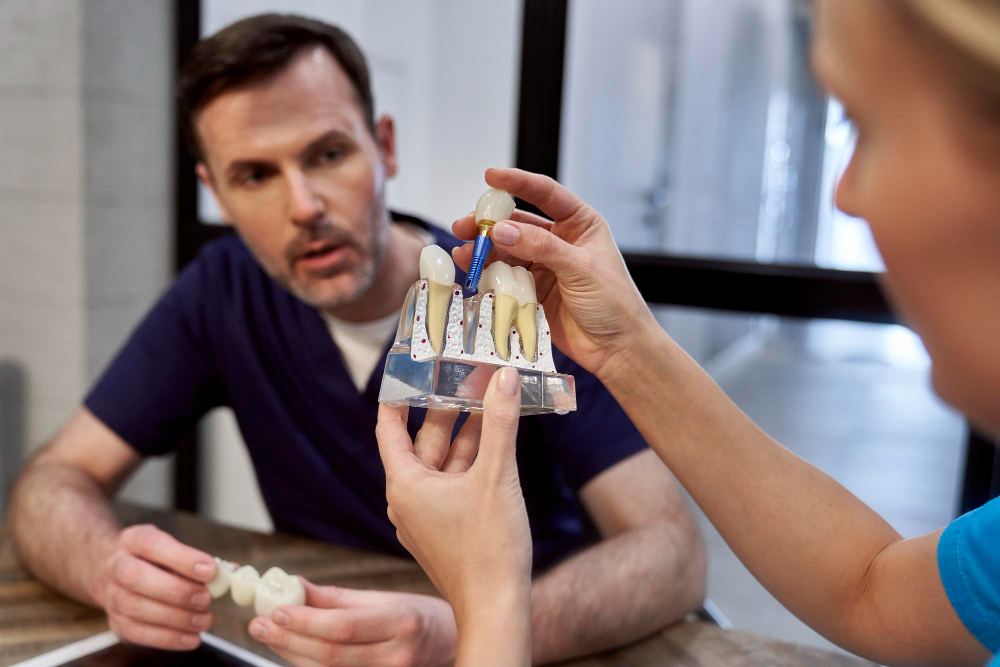
Dental implants are a popular choice for tooth replacement. First, a dentist places a small metal post into your jawbone. Over time, the bone grows around the post, making it strong. Next, a crown (artificial tooth) is attached to the post. This looks and feels like a real tooth.
Because of these factors, dental implants are often recommended for healthy adults who want a long-term solution.
Dental Bridges: Benefits, Procedure, Pros and Cons
Dental bridges are another way to fill a gap from missing teeth. A bridge uses the teeth on either side of the gap to hold a false tooth in place. The dentist shapes these nearby teeth and covers them with crowns. Then, the false tooth is attached between them.
Because bridges rely on nearby teeth, they may not be right for everyone. Your dentist will check if your teeth are strong enough to support a bridge.
Dentures: Benefits, Procedure, Pros and Cons
Dentures are removable devices that replace missing teeth. They can be used for a few teeth (partial dentures) or all teeth (full dentures). The dentist takes impressions of your mouth to make sure the dentures fit well.
Because dentures are easy to remove, they are a good choice for people who want a simple solution or have lost many teeth.
How to Choose the Right Option for You
Choosing between implants, bridges, and dentures depends on many factors. For example, your age, oral health, and budget all play a role. Here are some things to consider:
Because everyone is different, it is best to talk with your dentist about your needs and goals. They can help you find the best tooth replacement for your situation.
Preventing Tooth Loss
While tooth replacement options are helpful, it is even better to keep your natural teeth. Good oral care can lower your risk of losing teeth. Here are some tips to help prevent tooth loss:
Take charge of your health. Connect with us today at Dentmax Dental Clinic